
The thermostat is a small, inexpensive part with a big job. It sits quietly between the engine and the radiator, deciding when coolant can flow, and when it works properly, you never think about it. When it fails, the effects can range from an annoying heater to a seriously overheated engine. Because the symptoms can look like other cooling system problems, many drivers are not sure what they are dealing with. This guide explains how a thermostat works, how a stuck thermostat causes overheating, the signs of a bad thermostat to watch for, and what a proper diagnosis involves. If you are dealing with engine overheating in Tulsa and suspect a thermostat, this will help you know what to look for and what to do next.
What Does a Thermostat Do?
An engine runs best within a fairly narrow temperature range. If it is too cold, fuel does not burn as cleanly, wear increases, and efficiency suffers. If it is too hot, parts can warp and fail. The thermostat is a temperature controlled valve that regulates this. When the engine is cold, the valve stays closed, so coolant circulates only within the engine and warms up quickly. Once the coolant reaches the right temperature, the valve opens and lets coolant flow to the radiator, where it sheds heat before returning to the engine. A healthy thermostat opens and closes as needed to hold the temperature steady.
How a Stuck Thermostat Causes Overheating
A thermostat can fail in two ways. If it sticks closed, coolant cannot flow to the radiator. The engine keeps making heat, but the heat has nowhere to go, so the temperature climbs fast. This is the dangerous failure, because overheating can damage the engine in a short time. If it sticks open, coolant flows to the radiator all the time, so the engine may take a long time to warm up, or never reach its normal temperature. This is less dangerous in the short term, but it hurts efficiency, heater performance, and long term engine health. Either way, a thermostat that does not do its job is worth fixing promptly.
Signs of a Thermostat Stuck Closed
- The temperature gauge climbs quickly, sometimes within a few minutes of starting
- A temperature warning light comes on
- Steam or vapor rising from under the hood
- The upper radiator hose is very hot, while the lower hose stays cooler, or the reverse is true
- Coolant bubbling or boiling over from the reservoir
- A sweet smell from escaping coolant
- Reduced power or a knocking sound as the engine overheats
- Overheating that happens even at highway speed, not just in traffic
If the engine is overheating, pull over safely and turn it off. Do not keep driving in the hope that it passes, since continued overheating can cause major damage. Never open the radiator or coolant cap on a hot engine, because the system is under pressure and the coolant can cause serious burns. Let the engine cool completely, and call for help instead of continuing if you are not sure it is safe.
Signs of a Thermostat Stuck Open
- The temperature gauge stays low or takes a very long time to reach normal
- The heater blows lukewarm or cool air, especially in cold weather
- Poor fuel economy
- A check engine light, since the car’s computer can detect that the engine is not reaching its target temperature
- The engine runs rough or hesitates when cold
- Defrosting windows takes longer than it should
- The temperature gauge shows normal temperatures at times and low temperatures at others
A stuck open thermostat is easy to dismiss because the car still runs. Over time, though, an engine that runs too cool can suffer from fuel dilution in the oil, extra wear, and more emissions, so it should not be ignored.
Signs of a Thermostat That Sticks Only Sometimes
Thermostats do not always fail cleanly. A worn one may stick, open late, or open partway. That can show up as a temperature gauge that swings up and down, overheating followed by a return to normal, a heater that works some days and not others, or coolant that seems to move in bursts. Erratic behavior like this is a classic sign that the thermostat is on its way out, and it is worth having it checked before it fails completely.
Other Problems That Look Like a Bad Thermostat
Several cooling system faults share symptoms with a failing thermostat, and replacing the wrong part wastes time and money. Possible look alikes include:
- Low coolant from a leak
- A failing water pump that does not circulate the coolant properly
- A clogged radiator that restricts flow
- A cooling fan that does not turn on
- A faulty temperature sensor or gauge that gives false readings
- Air trapped in the cooling system
- A bad radiator cap that cannot hold pressure
- A failing head gasket, which can cause overheating, white exhaust smoke, and disappearing coolant
A technician can sort these out with a few tests, which is why a proper diagnosis is better than guessing. Our article on tornado season and temperature swings and car care in Tulsa explains how Tulsa’s changing weather puts extra stress on the cooling system and other parts.
What Causes a Thermostat to Fail?
Thermostats wear out from thousands of heating and cooling cycles. The spring and the wax element that make them work can weaken, and deposits and rust in old coolant can cause the valve to stick. Coolant that has gone too long without being changed loses its protective qualities, which speeds up corrosion. A past overheating event can also damage a thermostat. Following the coolant service schedule in your owner’s manual is one of the best ways to help this part last.
How a Bad Thermostat Is Diagnosed
A good diagnosis starts with listening and looking, and then testing. A technician will typically:
- Ask when the symptoms happen, such as at startup, in traffic, or at highway speed
- Check the coolant level and condition, with the engine cool
- Look for leaks and for signs of overheating
- Watch how quickly the engine warms up and what temperature it reaches
- Compare the readings on a scan tool with the temperature gauge, if the car supports it
- Feel or measure the temperature of the radiator hoses as the engine warms
- Check the cooling fans and the radiator cap
- Pressure test the system if a leak is suspected
- Scan for trouble codes, especially if the check engine light is on
The aim is to confirm the thermostat is the cause before replacing it, so the repair solves the problem the first time.
What Does a Thermostat Replacement Involve?
The thermostat sits in a housing, usually where a coolant hose meets the engine. A replacement typically involves letting the engine cool, draining part of the coolant, removing the housing, installing a new thermostat and a new gasket or seal, and refilling the system with the correct coolant. The system then has to be bled of trapped air, and the technician checks for leaks and confirms that the engine warms up and holds a steady temperature. The location of the thermostat varies a lot between vehicles, so some are quick to reach and others are tucked behind other parts. Because old coolant contributes to failures, it is also a good time to ask whether the coolant is due for a service, and to look at the hoses and the radiator cap.
Can You Keep Driving With a Bad Thermostat?
It depends on how it has failed, but it is risky either way. A thermostat that is stuck closed can overheat the engine quickly, and driving on can cause damage that costs far more than the part. A thermostat that is stuck open is less urgent, but it should still be replaced soon. If your car is overheating, stop driving and get help. If you only notice a weak heater or slow warm up, plan to have it checked in the near future. Our guide to the top 10 reasons your car won’t start and how to get back on the road is a helpful reference if an overheated engine leaves you stranded or the car will not start afterward.
How to Help Prevent Thermostat Problems
- Follow the coolant replacement schedule in your owner’s manual
- Use the type of coolant your manufacturer specifies, mixed correctly
- Check the coolant level regularly, when the engine is cold
- Pay attention to the temperature gauge, and note anything unusual
- Fix coolant leaks promptly
- Have the cooling system inspected before summer and winter
- Do not ignore a heater that suddenly blows cold
Can a Mobile Mechanic Replace a Thermostat?
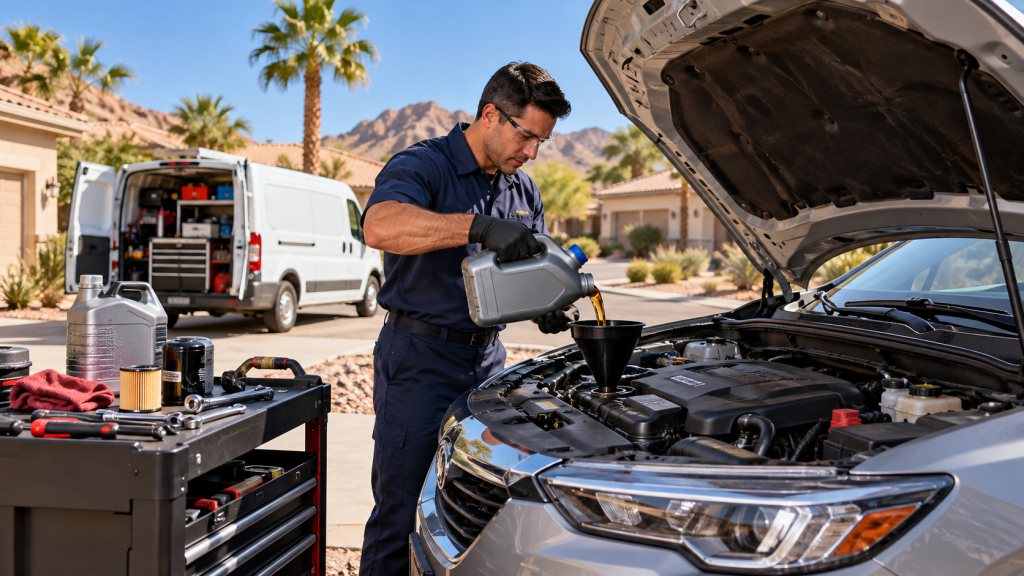
In many cases, yes. A mobile mechanic can come to your home or workplace in the Tulsa area, inspect the cooling system, test for the cause of overheating, and replace a thermostat on site on many vehicles. That is especially helpful when your car is not safe to drive. Some vehicles bury the thermostat in a hard to reach spot, and repairs that involve internal engine damage or need a lift or specialized equipment may need a full shop. A trustworthy technician will tell you honestly when that is the case. When you book, describe the symptoms, when they happen, whether you have seen steam or lost coolant, and your vehicle’s year, make, model, and mileage.
Do Not Wait for the Gauge to Climb
A thermostat usually gives some warning before it fails completely. A gauge that wanders, a heater that comes and goes, or a longer warm up are all clues. Acting on them while the problem is small usually means a simple repair, while waiting can mean an overheated engine and a much bigger one. If you have noticed any of the signs above, have your cooling system checked.
To learn more about our services, visit our homepage. If you would like your thermostat or cooling system checked, reach out through our contact us page and we will come to you anywhere in the Tulsa area.